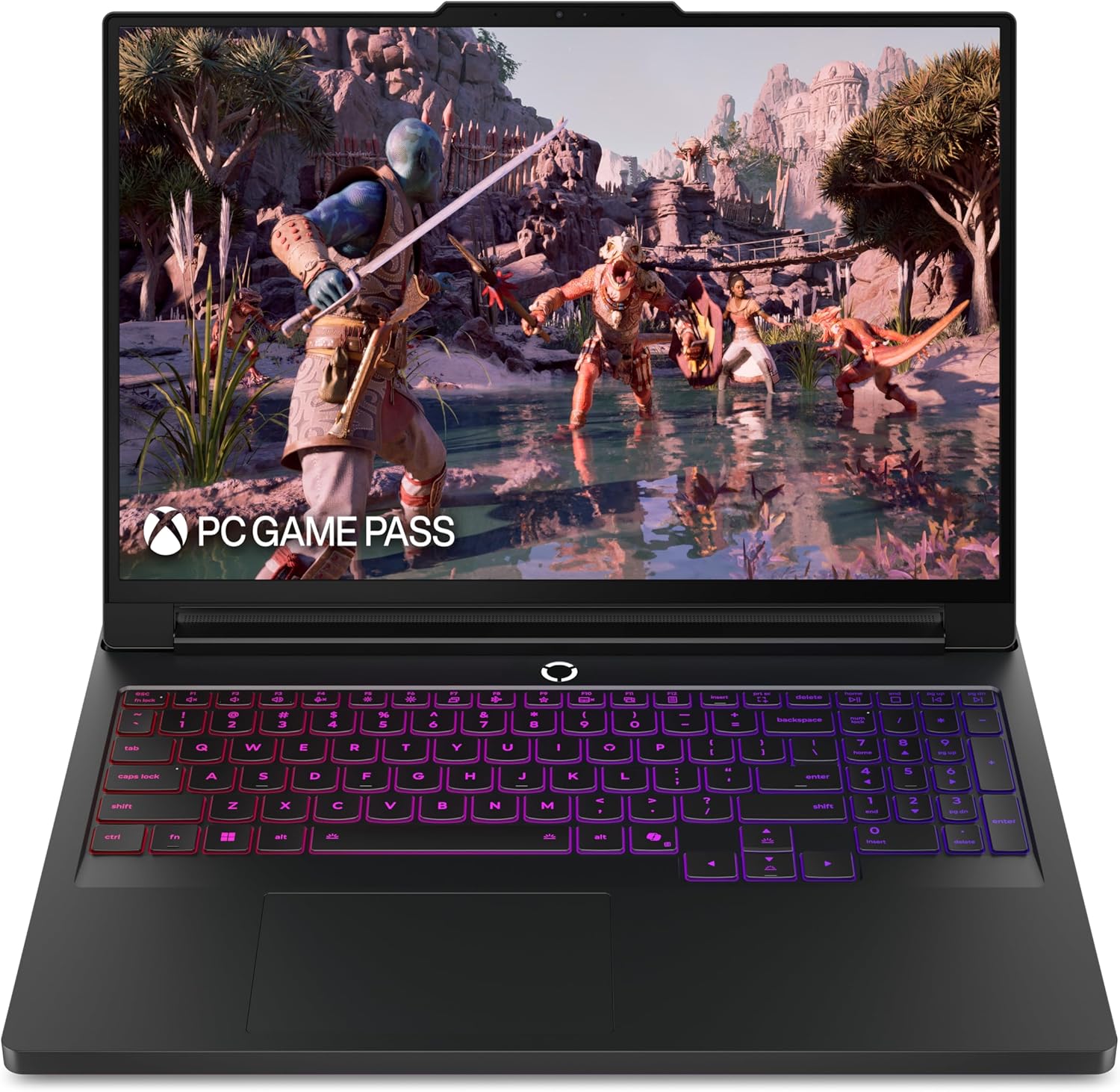
Lenovo Legion Pro 7i Analysis: OLED Meets RTX 5070 Ti
The Blunt Verdict
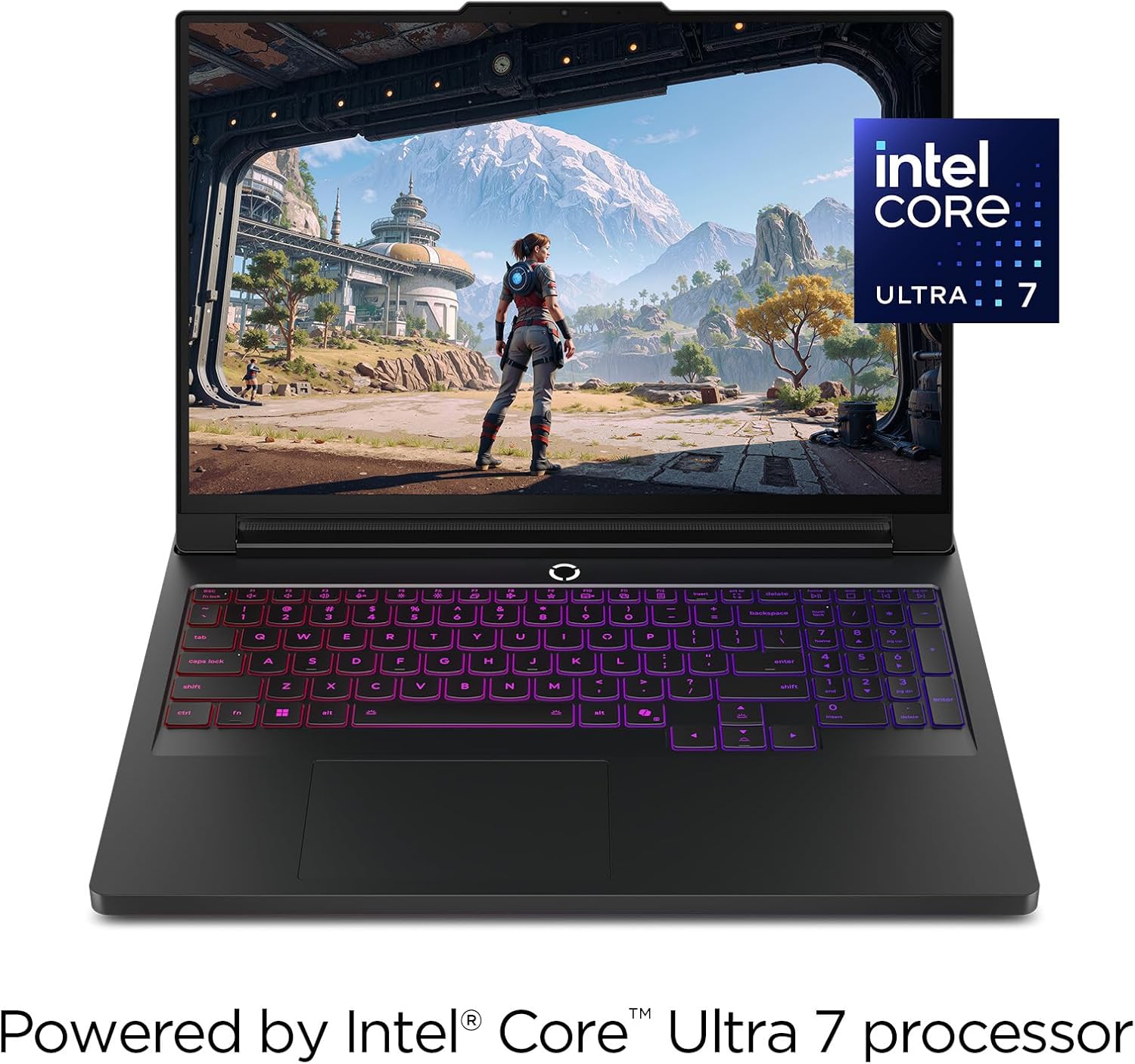
The Lenovo Legion Pro 7i is a desktop replacement that earns that label. Fitted with an NVIDIA GeForce RTX 5070 Ti and Intel’s Core Ultra 7 255HX, this is a machine aimed squarely at people who want serious gaming performance without building a full tower PC. If you’re looking at the premium gaming laptop category and want near-top-tier GPU power in a 16-inch chassis, this is one of the strongest configurations you can get right now. The headline weakness is everything that comes with that power — weight, a sizeable charging brick, and battery life that only holds up when you’re not gaming.
The 32GB of DDR5 RAM, 2TB of storage, and a 16-inch OLED panel running at 240Hz with a native resolution of 3840×2160 round out a spec sheet that looks almost absurdly capable on paper. In practice, you’re getting a machine that can handle 4K gaming, video editing, 3D work, and heavy multitasking simultaneously — and the OLED display means you’ll actually see the results in a way that IPS panels simply can’t match. Understanding what these specs mean in day-to-day use is worth spending some time on — our laptop specs explained guide covers the fundamentals if you want a plain-English breakdown before reading further.
Buy this if you want a machine that replaces a desktop gaming rig or handles creator workloads at the high end. Don’t buy it if you need something you can throw in a bag and work from comfortably on battery, or if you’re primarily doing office work and light browsing — this hardware is overkill for that, and you’d be better off with something from the mid-range tier.
See the Lenovo Legion Pro 7i listing and current availability on Amazon.
Pros and Cons
Pros
- RTX 5070 Ti with 12GB GDDR7 VRAM puts this among the most capable gaming GPUs currently available in a laptop form factor
- OLED panel at 240Hz delivers genuinely stunning image quality — buyers consistently single this out as a standout feature
- 32GB DDR5 at 6400MHz is the right amount of RAM for high-end gaming and creative workloads in 2025, with room to grow up to 96GB
- 2TB storage means you’re not immediately juggling installs and external drives the day you unbox it
- Legion Coldfront cooling system with rear exhaust venting — thermal management holds up well according to multiple buyers, even under load
- Build quality is consistently praised as genuinely premium, not just marketing speak
Cons
- Heavy chassis and a notably large 400W power brick — this is not a machine you’ll want to carry around all day
- Battery life is rated at 7 hours but that figure applies to light tasks only; gaming unplugged will drain it significantly faster
- Glossy OLED display picks up reflections in bright daylight conditions — one buyer flagged this as reducing comfort in everyday use
Spec Breakdown
- Model: Lenovo Legion Pro 7i
- CPU: Intel Core Ultra 7 255HX (up to 5.2GHz)
- RAM: 32GB DDR5 at 6400MHz (upgradeable up to 96GB)
- Storage: 2TB
- GPU: NVIDIA GeForce RTX 5070 Ti (12GB GDDR7)
- Display: 16-inch OLED, 3840×2160, 240Hz, 500 nits, glossy, touchscreen
- Battery: 99.9Wh lithium polymer, rated 7 hours
- OS: Windows 11 Pro
- Weight: 5.65 lbs (approx. 2.56kg)
- Ports: 5x USB total, HDMI, Ethernet — 7 ports total
- Connectivity: Wi-Fi 7 (802.11ax), Bluetooth 5.4, Ethernet
- Keyboard: Backlit, RGB
- Camera: Yes (webcam included)
- Audio: Nahimic Audio Solution, stereo speakers
Hardware & Performance Reality Check
The Intel Core Ultra 7 255HX is a high-performance H-series chip built for sustained workloads — not the watered-down U-series processors you’ll find in office machines. It boosts to 5.2GHz and handles multithreaded tasks without throttling early. Our CPU guide covers what the HX suffix actually means in practice, but the short version is: this chip is built for sustained performance under load, not efficiency. Paired with 32GB DDR5 RAM running at 6400MHz, day-to-day multitasking is never going to be the bottleneck. That said, one buyer specifically noted they chose this chip over the 275HX because the latter runs significantly hotter for around a 10% CPU performance difference — a reasonable trade-off. If you want to understand how much RAM is genuinely useful here, our RAM guide has a plain-English answer. Critically, the RAM is not soldered — it is upgradeable up to 96GB, which is a meaningful differentiator at this tier. Machines with soldered RAM give you no upgrade path when you eventually need more.
The 2TB of storage is generous and a buyer confirmed it’s a Samsung SSD, which is a good sign for read/write speeds — though Lenovo doesn’t officially spec the drive model in the product listing. The GPU is where this machine separates itself: the NVIDIA GeForce RTX 5070 Ti with 12GB of GDDR7 VRAM is among the most capable GPUs currently available in a laptop. Ray tracing, DLSS 4, and AI-enhanced frame generation are all supported. One buyer ran Clair Obscur at max settings and described the performance as flawless. This isn’t marketing padding — it’s consistent with where the RTX 5070 Ti sits in the Blackwell architecture hierarchy. For context on where this positions against the broader GPU market, our performance benchmarks page has independent reference points.
For everyday use in 2026: student work and office tasks are trivially handled — but using a machine this powerful for spreadsheets and web browsing is like taking a Formula 1 car to the supermarket. Gaming at 4K and 1440p is where the hardware is actually calibrated. Video editing and 3D rendering will benefit from both the GPU and the 32GB RAM headroom. Programming workloads, even heavy compilation tasks, are non-issues. The one genuine caveat for any use case: this machine needs to be plugged in for sustained performance. Unplugged, power limits kick in and performance drops, as they do on every high-TDP gaming laptop.
The port situation is worth flagging. Seven ports in total including USB-C, HDMI, and Ethernet — connectivity is solid for a gaming machine. Wi-Fi 7 support is present, which puts this ahead of machines still shipping with Wi-Fi 6. Bluetooth is 5.4. If you want a full breakdown of what each port type actually does, the ports guide covers it without the jargon.
Check the full spec sheet and buyer Q&As for the Lenovo Legion Pro 7i on Amazon.
Everyday Usability: Battery, Build & More
This is not a machine you’ll mistake for a thin-and-light. At 5.65 lbs (around 2.56kg) the chassis has real weight to it, and multiple buyers confirmed this. One described feeling the weight on their legs during extended use on the sofa. The 400W power brick adds more bulk — you’ll want to leave that at the desk if you’re travelling light. Lenovo rates battery life at 7 hours, which is plausible for mixed light use, but anyone gaming unplugged should expect considerably less. This is standard behaviour for high-TDP gaming hardware and isn’t a defect — it’s physics. The thermal design uses Lenovo’s Legion Coldfront system with rear exhaust venting, and buyers are consistently positive about it. Fan noise is present under load, as it should be, but several users noted the machine stays quiet during lighter tasks and doesn’t get uncomfortably hot during gaming sessions.

The OLED display is genuinely one of the standout elements here, and it’s worth understanding what that means for daily use — our display types guide covers OLED vs IPS in detail if you want the full picture. At 500 nits peak brightness with near-perfect contrast, this panel makes a visible difference compared to standard IPS gaming screens. The 240Hz refresh rate keeps motion sharp. The catch is the glossy finish — several buyers noted reflections in bright ambient light, which reduces comfort for daytime use near windows. It does have touchscreen capability (capacitive), though that’s an unusual feature on a gaming laptop and most buyers will likely ignore it. The keyboard is described as a step above typical membrane boards — tactile and well-lit with RGB that’s also compatible with Razer Chroma for those who want more control over lighting profiles. Audio via the Nahimic solution earns genuine credit from buyers, with one comparing it favourably to an ASUS ROG Zephyrus in output quality. The webcam is present but specs beyond its existence aren’t confirmed in the data. Build quality overall is consistently described as premium — not just the lid, but the full chassis construction.
Lifespan & Future-Proofing
Lenovo’s Legion line has a solid track record for chassis durability. The build quality feedback from buyers aligns with what you’d expect from a machine at this tier — not flimsy plastics or flex in the lid. Realistically, you should expect this chassis to last five or more years without mechanical issues, assuming normal use. At 2.56kg it won’t be abused through daily commuting, which works in its favour for long-term durability.
On the spec longevity front, this is where the Lenovo Legion Pro 7i makes the strongest case for itself. The RTX 5070 Ti with 12GB GDDR7 is current-generation Blackwell architecture — that GPU will remain capable for demanding games and creative workloads well beyond 2026. One buyer made a specific point about choosing the 5070 Ti over a 5060 precisely because of VRAM limitations in future game titles — a legitimate concern given how VRAM demands have been trending upward. The 32GB DDR5 RAM is upgradeable to 96GB, which means this machine has an actual upgrade path rather than a dead end. The 2TB storage gives you room to breathe for years before you need to think about expansion. Wi-Fi 7 support means connectivity won’t become a limiting factor anytime soon. If anything ages this machine, it’ll be CPU generation — the 255HX is strong today, but Intel’s future socket changes mean this specific chip will eventually be the ceiling rather than the floor. That’s a five-to-seven year horizon, not two.
View current stock levels for the Lenovo Legion Pro 7i on Amazon.
What Buyers Are Saying (And Potential Dealbreakers)
The Lenovo Legion Pro 7i holds a rating of 4.3 out of 5 from 81 customer reviews on Amazon. That’s a reasonable sample size and the sentiment is overwhelmingly positive — this is one of those machines where the buyers who chose it are generally satisfied they made the right call. A few specific patterns emerge worth paying attention to.
The OLED display is the single most frequently praised element. Multiple buyers describe it as a “before and after” moment — especially those upgrading from IPS panels. Gaming visuals and colour accuracy for creative work both benefit. The only counterpoint is the glossy finish causing reflections in bright environments, which one buyer from Mexico flagged as a minor daily frustration offset by the brightness.
Thermal performance under gaming load earns consistent credit. One buyer paired the machine with a laptop cooler to keep CPU temps in the 70s and GPU below 70°C — not a requirement, but worth noting as an option for users who push the hardware hard. Without additional cooling, temperatures are still reported as manageable during extended gaming sessions.
The weight and power brick are the main practical complaints. No buyer described either as a dealbreaker, but it’s not a machine that feels light in a bag. One buyer flagged that a bundled Nvidia game code (Resident Evil Requiem) failed to activate despite following all recommended steps — a minor annoyance, but worth knowing if that bundle matters to you. A delivery delay was reported by one UK buyer, though Amazon resolved it — not a product issue, but worth factoring into expectations if ordering during busy periods.
Buyer Highlights
“Games run smoothly on full graphics and I didn’t even notice the fans running — not getting hot either.” — Consistent feedback from buyers pushing the GPU under sustained load.
“This is my first OLED and higher refresh rate screen — it’s beautiful, sharp, and colourful.” — First-time OLED buyers in particular are struck by the visible quality difference.
“The power brick is noticeably heavy — it’s 400W and it’s big.” — Worth planning for if you intend to carry the full setup anywhere regularly.
“Build quality is something I haven’t seen before — top quality materials, can’t get enough of it.” — A recurring observation across multiple independent buyers in different regions.
“After 5 years on a Legion 5 Pro I upgraded to the Legion 7 Pro — best decision, money well spent.” — Relevant context from an existing Legion user who already knew the brand’s strengths and limitations.
Who Should Buy It (And Who Shouldn’t)
Buy If
- You want a desktop-replacement gaming machine and plan to use it primarily at a desk, plugged in — this is exactly what the hardware is designed for
- You do video editing, 3D rendering, or other GPU-accelerated creative work and need a display that accurately represents colour and contrast
- VRAM headroom for future game titles matters to you — 12GB GDDR7 on the RTX 5070 Ti is among the most future-ready configurations available in a laptop right now
- You want upgradeable RAM with a genuine headroom ceiling of 96GB — unlike soldered configurations found on many gaming laptops, you have an actual upgrade path here
Avoid If
- Portability or all-day battery life is a priority — at 2.56kg with a 400W brick, this machine does not travel well, and unplugged gaming performance is significantly curtailed
- Your primary use case is office work, web browsing, or light productivity — you’d be paying for hardware you’ll never use, and something from our budget laptop range or even a well-specced professional laptop would serve you far better without the overkill
- Bright daylight environments are where you’ll use it most — the glossy OLED finish picks up reflections and will frustrate you in those conditions
The Bottom Line
The Lenovo Legion Pro 7i is a well-executed high-end gaming laptop that does what it says. The RTX 5070 Ti, OLED display, and upgradeable 32GB DDR5 RAM combine into a package that will stay relevant for years — and the build quality backs up the asking price. The weight and power brick are real constraints, not minor footnotes, so go in clear-eyed about what you’re getting. If this sits in your usage profile — primarily desk-based, gaming or creative work, display quality matters — it’s a genuine recommendation without significant reservations.
Find the Lenovo Legion Pro 7i and read the latest buyer questions on Amazon.
At LaptopAdvisorOnline, our methodology is built on data transparency rather than simulated hands-on testing. We rigorously analyse official manufacturer specifications and aggregate verified customer sentiment to provide objective, fluff-free buying advice that helps you cut through the marketing jargon.
As an Amazon Associate, I earn from qualifying purchases.
Browse by Specification
Looking for something specific? Browse our analyses by hardware and feature below, or check all laptop analyses in the Best Premium Gaming Laptops category archive.
[AMD Processor Laptops] — [Intel Processor Laptops] — [16GB RAM Laptops] — [32GB RAM Laptops] — [Dedicated Graphics] — [Long Battery Life] — [Lightweight Laptops] — [Student Laptops]
Browse by Screen Size
[13-inch Laptops] — [14-inch Laptops] — [15-inch Laptops] — [16-inch+ Laptops]