
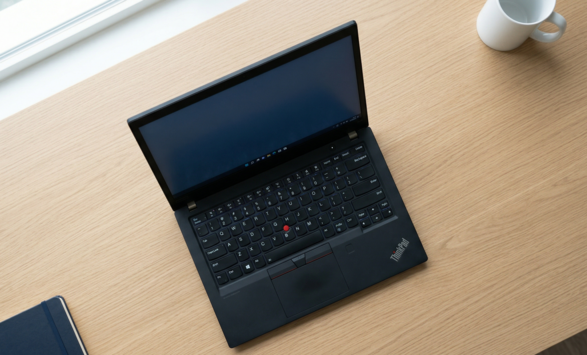
Is a Refurbished Laptop Worth Buying in 2026? Here’s the Honest Answer
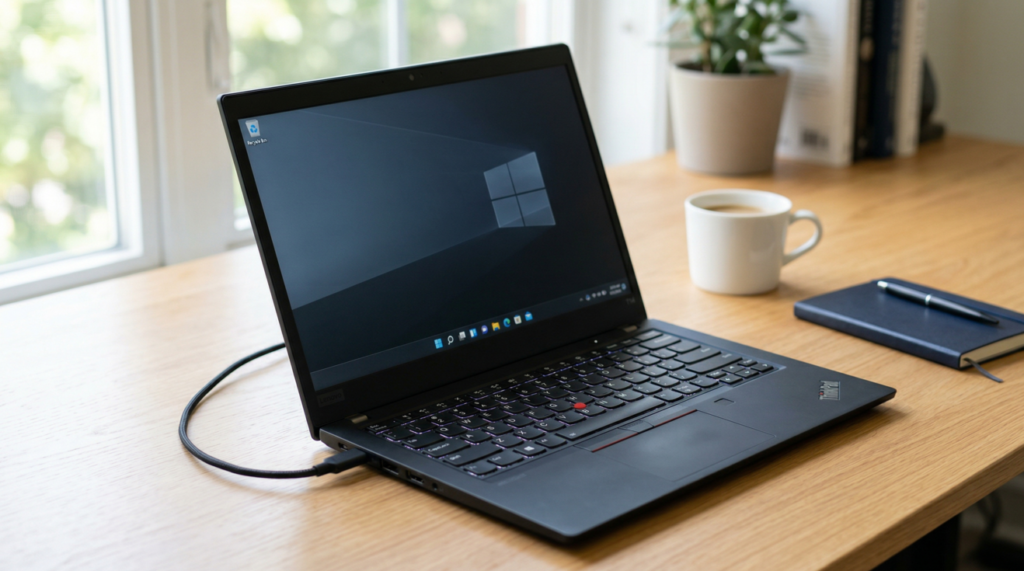
Is a refurbished laptop worth buying in 2026? The answer has never been more clearly YES — and the gap between refurbished and new has never been wider.
Two forces have collided to create a window of extraordinary value: new laptop prices have risen 15–30% due to the global memory crisis we covered in our RAMageddon article, while refurbished business laptops — stocked with components priced before the shortage — remain anchored at £200–£350. The result is that a £300 refurbished Lenovo ThinkPad T14 with 16GB RAM, a 512GB SSD, military-grade build quality, and Windows 11 Pro now delivers a fundamentally better specification than a brand-new consumer laptop costing nearly twice as much.
This is not a marginal advantage. It is a structural shift in the laptop market, and it will not last indefinitely. Here is everything you need to make a smart refurbished purchase right now.
Why 2026 is different from any previous year
The economics of refurbished versus new have shifted so dramatically that The Register declared the secondary laptop market had gone “mainstream” in a February 2026 feature on the memory crunch. UK refurbished PC sales effectively doubled between Q4 2024 and Q4 2025, making Britain Europe’s largest refurbished laptop market — overtaking Germany for the first time. Over 30% of UK consumers now indicate a preference for refurbished over new, and the global refurbished laptop market reached $8.68 billion in 2026.
The reason is straightforward. As we explained in detail in our article on why laptop prices are rising in 2026, Samsung, SK Hynix, and Micron — who control roughly 95% of global DRAM production — have diverted manufacturing capacity toward high-bandwidth memory for AI data centres. DRAM prices rose approximately 172% through 2025, and TrendForce’s February 2026 update projected a further 90–95% quarter-on-quarter increase in Q1 2026 alone — the largest single quarterly jump on record. Dell raised prices 15–20% from December 2025. Lenovo announced all quotations expired on 1 January 2026 with immediate hikes. HP disclosed that memory now accounts for 35% of laptop component costs, up from 15–18% previously.
Refurbished laptops are insulated from all of this. A machine refurbished today had its memory installed at 2022–2024 prices. At the same time, two upgrade cycles — the Windows 10 end-of-life in October 2025 and the AI-PC transition — have flooded the secondary market with high-quality 2–4 year old business machines returning from corporate leases. More supply at pre-crisis prices, while new machines become more expensive. The price gap between new and refurbished has widened to 55–75% — the largest in the modern refurbished era.
Intel CEO Lip-Bu Tan confirmed there will be “no relief until 2028.” Analysts at IDC and Micron project new fabrication capacity won’t arrive in meaningful volume until then. The window of refurbished value will remain open for at least 12–18 months.
The spec comparison that makes the case
The clearest illustration of what has happened is a direct comparison at two common price points.
At £300 refurbished, a ThinkPad T14 Gen 2 delivers an 11th-generation Intel Core i5, 16GB RAM, 256–512GB NVMe SSD, a 14-inch Full HD IPS display, MIL-STD-810H military-grade chassis construction, Windows 11 Pro, Thunderbolt 4 connectivity, a spill-resistant backlit keyboard, fingerprint reader, and TPM 2.0. This machine originally retailed at over £1,000 new.
At £500 new, a typical consumer laptop in 2026 offers an Intel Core i3 or entry-level i5, 8GB RAM — the absolute bare minimum for comfortable Windows 11 use — 256–512GB SSD, a plastic consumer chassis with no durability testing, Windows 11 Home, and typically fewer ports with no Thunderbolt support.
Which? magazine has explicitly flagged that most new laptops at the £500 price point ship with only 8GB RAM and warns of slowdowns as a result, recommending 16GB for comfortable everyday use. Getting 16GB in a new laptop now requires spending £600 or more — and even then, you are buying a consumer chassis rather than an enterprise one.
The refurbished ThinkPad has more RAM, a better-built chassis, better keyboard, superior connectivity, a more capable OS licence, and better security features. The only things the new machine has are a newer processor generation and a factory warranty — both of which matter less than the spec gap at this price point.
Why corporate lease returns are the best refurbished laptops you can buy
Not all refurbished laptops are equal, and this distinction matters. The best refurbished machines are corporate fleet returns — ThinkPads, Dell Latitudes, and HP EliteBooks coming off 2–4 year enterprise leases. These machines were managed by IT departments, kept updated, and typically used in office environments. Many spent most of their lives docked at a desk, experiencing minimal physical wear. Major ITAD (IT Asset Disposition) companies report failure rates below 1% on refurbished enterprise hardware, lower than the failure rate on new consumer laptops where factory defects have not yet been caught.
Enterprise laptops are built to a specification that consumer machines simply are not. All three major business lines — Lenovo ThinkPad, Dell Latitude, and HP EliteBook — undergo MIL-STD-810H testing covering mechanical shock, vibration, temperature extremes from -25°C to 63°C, humidity, dust, and pressure changes up to 15,000 feet. Their chassis use carbon fibre reinforcement and magnesium alloy rather than plastic. They include spill-resistant keyboards, fingerprint readers embedded in power buttons, TPM 2.0 security chips, and Windows 11 Pro licences stored in the BIOS.
Reliability data from ten years of repair records shows ThinkPads have a 3-year failure rate of just 8.3% and an average lifespan of 6.2 years. Consumer Dell Inspirons show 23% failure rates and average roughly 3 years. The build quality difference is not subtle — it is measurable and significant.
The repairability advantage is equally important for buyers thinking about longevity. The Lenovo ThinkPad T14 series scored a perfect 10/10 on iFixit’s repairability index — one of only two laptop lines ever to achieve this score. Near-tool-free battery swaps, standard M.2 SSD storage, accessible display replacement, and individually replaceable ports mean a £35–£80 battery swap can extend a machine’s life by years. Our laptop screen replacement cost guide covers how repairing rather than replacing is the smart financial decision in 2026 — refurbished enterprise machines make that logic even more compelling because the parts ecosystem is well-established and affordable.
The Dell Latitude 5420 and HP EliteBook x360 1040 G8 demonstrate exactly this proposition in practice. Both machines offer specifications, connectivity, and build quality that no new consumer laptop at comparable prices approaches. These are not budget compromises — they are premium machines that happened to come off a corporate lease.
Where to buy and what the grades mean
Six platforms account for the majority of refurbished laptop sales, each with distinct advantages.
Back Market UK is the largest curated refurbished marketplace in Europe. It vets professional refurbishers, imposes minimum quality standards, grades products across four tiers (Premium, Excellent, Good, Fair), and backs every purchase with a 30-day money-back guarantee and 12-month warranty. Minimum battery health is 85%. ThinkPad and Latitude models start from around £200.
Amazon Renewed offers the familiar Amazon purchasing experience with a one-year Renewed Guarantee covering replacement or full refund. Products are tested to 80% battery capacity minimum (90% for Premium tier). The main advantage is Amazon’s returns infrastructure and Prime delivery — straightforward if something goes wrong.
Tier1 Online is a Manchester-based refurbisher processing corporate returns in-house from a 70,000 sq ft facility since 1995. They hold CAS-S and MOD List X approvals. Pricing is competitive and stock quality is consistently strong. Trustpilot rating is Excellent with over 6,000 reviews.
Laptops Direct operates a dedicated refurbished programme with BSI Kitemark certification — a third-party quality standard that adds meaningful credibility. Good for buyers who want an additional layer of independent verification.
CeX offers something the others cannot: 393 physical stores where you can inspect a machine before buying. Their warranty is the longest in the market at 24 months, which actually exceeds the standard manufacturer warranty on most new laptops. The trade-off is that stock varies by location and online selection is less consistent.
Grading systems are not standardised across platforms, which creates confusion. The working framework: Grade A means near-perfect with minimal signs of use — scratches invisible at arm’s length. Grade B means light scratches and minor wear visible on close inspection but fully functional. Grade C means noticeable cosmetic wear while remaining completely operational. Dell’s own certified refurbished programme explicitly states Grade B is “functionally equivalent to Grade A.” For most buyers, Grade B is the sweet spot — meaningful cosmetic discount for identical functionality and identical warranty.
Your rights when buying refurbished
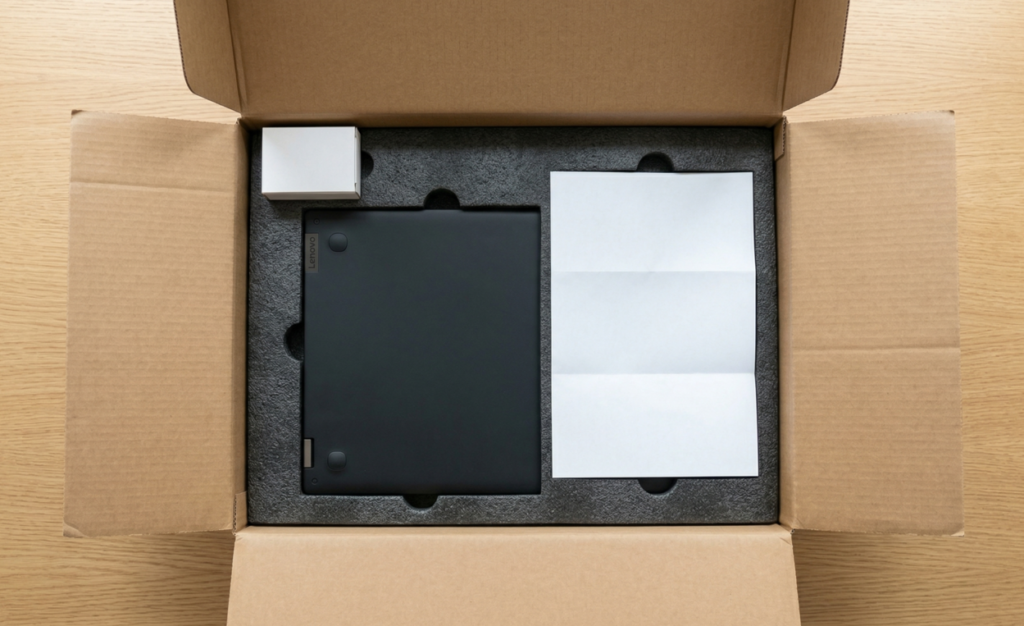
This is where buyers are better protected than most realise. The Consumer Rights Act 2015 provides identical legal protections for refurbished goods purchased from a business seller as it does for new products. The machine must be of satisfactory quality, fit for purpose, and as described. Cosmetic wear disclosed at point of sale is not a fault — but anything undisclosed is.
Within the first 30 days, you have an unconditional right to a full refund for any fault, with no argument required. Between 30 days and 6 months, the seller must repair or replace, and the burden of proof rests on them to show the fault was not present at delivery. Claims can be pursued for up to 6 years. Online purchases receive an additional 14-day cooling-off period under the Consumer Contracts Regulations 2013, and credit card purchases over £100 gain added protection through Section 75 of the Consumer Credit Act.
The warranty gap between refurbished (typically 12 months) and new laptops bought from John Lewis (2 years) is real but smaller than it appears in practice. After 6 months, the Consumer Rights Act still protects you — the burden simply shifts to you to show an inherent defect. And CeX’s 24-month warranty on refurbished machines actually exceeds what Currys offers on new laptops.
The honest limitations of buying refurbished
Battery health is the primary concern. A 2–4 year old battery will have degraded. Reputable sellers guarantee 80–85% minimum capacity. Below 80%, replacement is worth budgeting for — and on enterprise machines, a replacement battery costs £35–£80 with straightforward fitting. On arrival, run powercfg /batteryreport in Command Prompt and check the full charge capacity versus the design capacity. It takes 30 seconds and tells you exactly where you stand.
Four categories of refurbished laptops are worth avoiding entirely. Old Chromebooks where Google’s Auto Update Expiration has passed — these no longer receive security updates and are increasingly incompatible with modern web services. Pre-2018 Intel machines that fail Windows 11 hardware requirements — now that Windows 10 support has ended, these represent a security liability. Anything with less than 8GB RAM — inadequate for comfortable multitasking in 2026. And machines with HDD-only storage — the performance gap between an SSD and a spinning drive is night and day, and HDDs fail under vibration and impact in ways SSDs do not.
The minimum spec worth buying in 2026: 8th-generation Intel Core or Ryzen 3000-series processor or newer, 8GB RAM (16GB strongly preferred), 256GB NVMe SSD, Full HD IPS display. Anything meeting this specification from a reputable refurbisher at a reasonable price is likely to serve well for 3–5 years.
The environmental argument is as strong as the financial one
Manufacturing a new laptop produces an average of 331 kg of CO2 — roughly the same as driving 1,600 miles in a typical car — plus around 30 kg for transportation. A Cranfield University peer-reviewed study found that fully refurbished laptops produce only 6.34% of the CO2 emissions of new products — a 94% reduction. Britain generates approximately 1.6 million tonnes of e-waste annually, the second-highest per-capita rate on Earth. Right-to-repair legislation here currently does not cover laptops (it covers white goods and TVs), so consumer purchasing decisions carry more weight than policy does. Every refurbished laptop purchased is a new laptop not manufactured.
The verdict
The refurbished laptop market in 2026 is not a compromise option for buyers who cannot afford new. It is the financially rational choice for the majority of buyers, and the gap has never been wider. A £300–£350 refurbished ThinkPad T14 or Dell Latitude 5420 from a reputable seller delivers 16GB RAM, enterprise build quality, military-grade durability testing, a perfect iFixit repairability score, and Windows 11 Pro — at a price that undercuts new 8GB consumer machines by nearly half.
The memory crisis keeping new prices elevated will persist through at least 2027. The supply of high-quality corporate returns is strong right now. The Consumer Rights Act 2015 protects your purchase regardless of warranty length. And the environmental case adds weight to a decision that already makes complete financial sense.
If you are in the market for a laptop in 2026, the question is no longer whether refurbished is worth considering. It is whether you can justify paying significantly more for a new machine that is, in most respects, inferior.
I have spent years working in IT infrastructure and reviewing technology for British buyers. Affiliate relationships with Amazon do not influence scores or editorial assessments on this site.