Lenovo Legion 5 15IRX10 Analysis: OLED at a Cost
The Blunt Verdict
The Lenovo Legion 5 15IRX10 is a serious gaming machine with a display that genuinely deserves attention. If you’re after a 15-inch laptop that can handle demanding games, heavy creative software, and throw an OLED panel at you in the process, this sits near the top of what’s available right now. The headline weakness is battery life — it’s poor, and Lenovo aren’t being straight with the spec sheet about it either. More on that shortly.
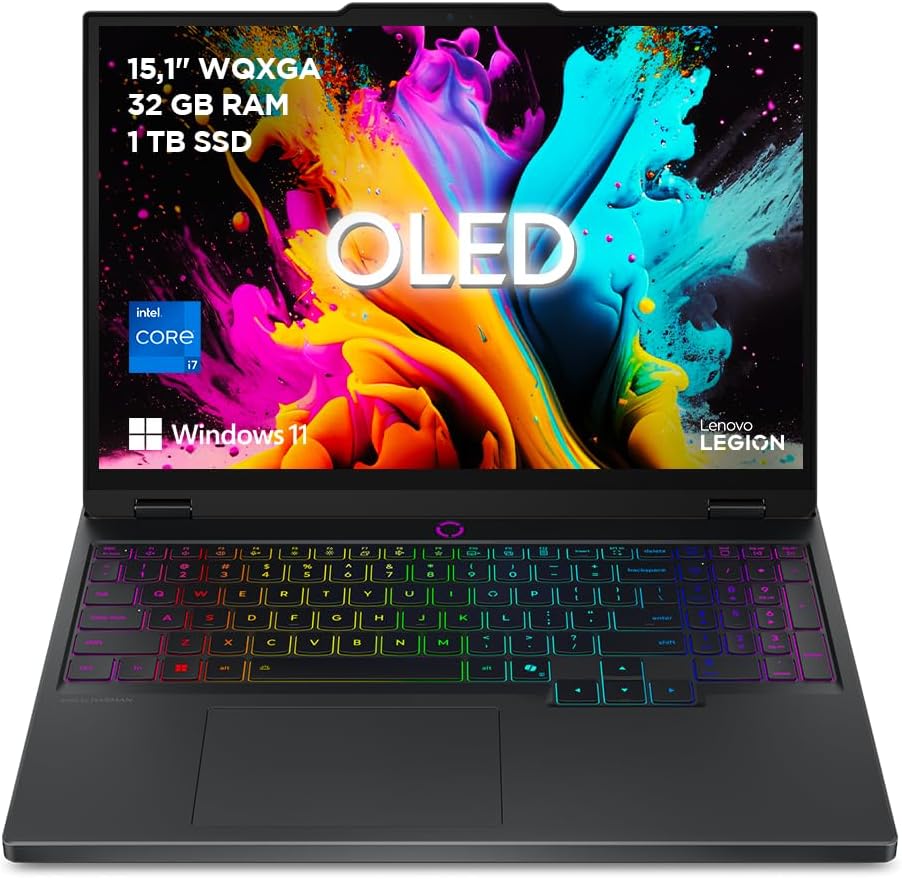
The core hardware is strong. An Intel Core i7-13650HX paired with 32GB of DDR5 RAM and an RTX 5070 with 8GB GDDR7 VRAM gives you genuine horsepower for gaming at high settings and creative workloads. The display — OLED, 2560×1600 WQXGA, 165Hz, 15.1 inches — is where this machine separates itself. OLED at this screen size and resolution, at this tier, is not common. Buyers have been consistently vocal about how good it looks.
Who should buy this? Gamers who want a visually stunning experience without going to a 17-inch chassis, and designers or architecture students running demanding software. Who shouldn’t? Anyone relying on this as a portable daily driver away from a plug socket. Battery life is genuinely bad — this is a desk laptop that happens to be moveable, not a commuter machine. If that’s your priority, check out something from our mid-range picks with better efficiency profiles.
See the Lenovo Legion 5 15IRX10 listing and current availability on Amazon.

Pros and Cons
Pros
- OLED WQXGA display at 165Hz is genuinely exceptional for gaming and colour-critical creative work — buyers have called it the standout feature consistently
- RTX 5070 with GDDR7 VRAM delivers 100fps+ on demanding titles at 1440p, confirmed by multiple buyers across Cyberpunk, Monster Hunter Wilds, and CS2
- 32GB of DDR5 RAM handles memory-hungry apps and multitasking without complaint — architecture software, heavy design tools, no issue
- Wi-Fi 7 and Bluetooth 5.4 put this ahead of most competitors on wireless connectivity
- RAM is upgradeable via SODIMM slots — not soldered, which matters for longevity
- Build quality and weight sit well for the spec level — lighter than typical gaming laptops at this tier
Cons
- Battery life is poor — real-world capacity in the UK unit appears to be 63Wh rather than the 80Wh listed, with under 90 minutes of use under gaming load
- Numpad layout has been specifically criticised as poorly designed — impractical for anyone who uses it regularly
- One buyer reported a complete system failure after one week — HDMI port failure leading to black screen; isolated or not, worth knowing
Spec Breakdown
- Model: Lenovo Legion 5 15IRX10 (83LY002RUK)
- CPU: Intel Core i7-13650HX (Raptor Lake), up to 4.9GHz
- RAM: 32GB DDR5, 4800MHz, SODIMM (upgradeable to 128GB)
- Storage: 1TB SSD, PCIe x4 (upgradeable to 2x M.2 2242 SSD, up to 1TB each)
- GPU: NVIDIA GeForce RTX 5070, 8GB GDDR7
- Display: 15.1-inch OLED, 2560×1600 WQXGA, 165Hz, 500 nits, glossy
- Battery: 80Wh listed (buyer reports suggest 63Wh in UK units)
- OS: Windows 11 Home
- Weight: 1.9kg
- Ports: USB 3.2 Gen 1, USB 3.2 Gen 2, HDMI, Ethernet, 3.5mm audio (7 ports total)
- Connectivity: Wi-Fi 7 (802.11be), Bluetooth 5.4
- Keyboard: RGB backlit, numeric keypad, gaming layout
- Camera: 5MP webcam
- Power Adapter: 245W
Hardware & Performance Reality Check
The Intel Core i7-13650HX is a 13th-gen Raptor Lake chip — not the latest architecture, but still a strong performer for gaming and creative workloads. It’s a hybrid design with performance and efficiency cores, and the maximum boost of 4.9GHz gives it enough headroom for CPU-intensive tasks like 3D rendering, CAD software, and simulation tools. Paired with 32GB of DDR5 at 4800MHz, this machine handles multitasking without drama. Importantly, that RAM sits in SODIMM slots — not soldered. That means you can upgrade it later, and the maximum ceiling is 128GB, which is unusually generous. If you want to understand what RAM amounts actually mean in practice, that’s worth a look before buying.
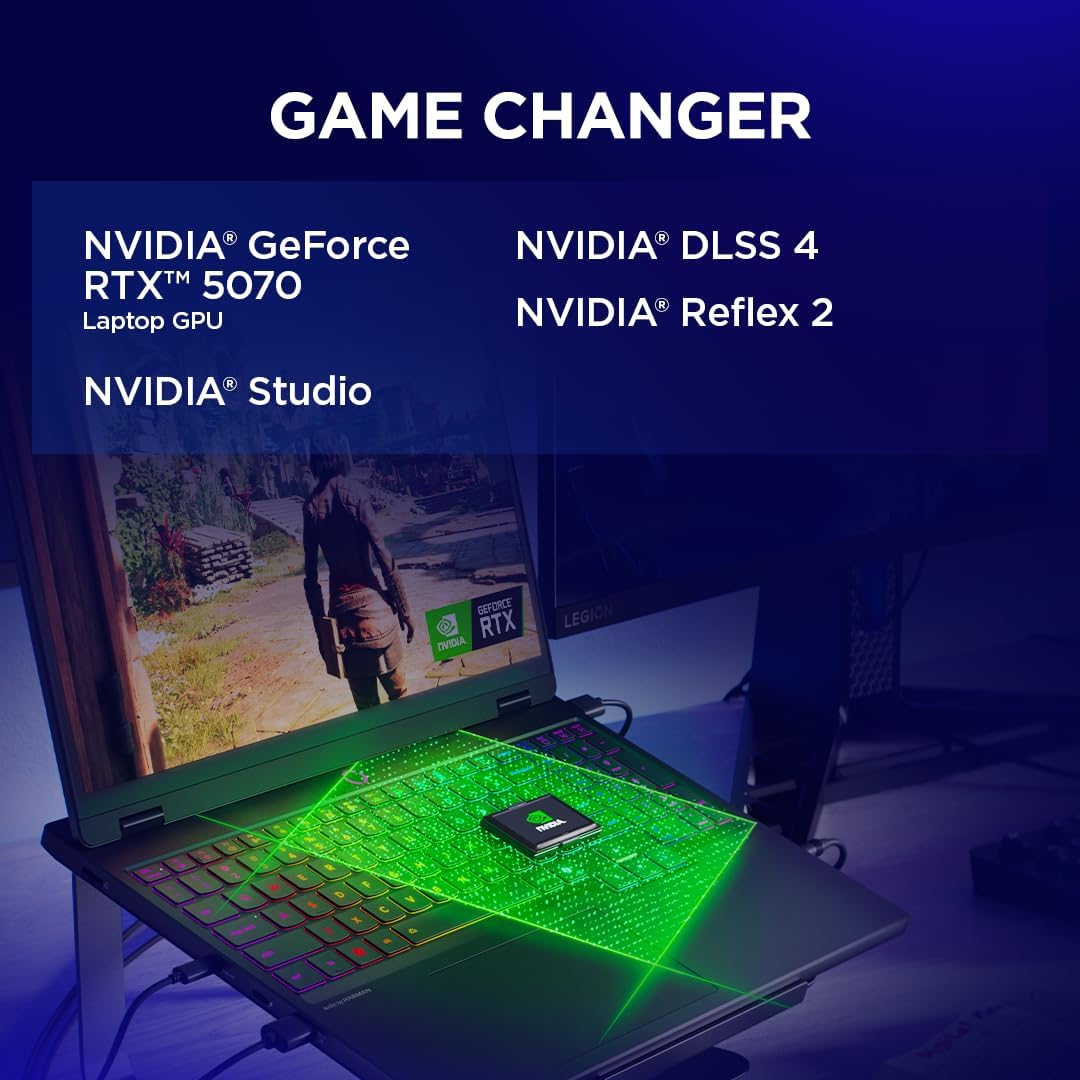
Storage is a 1TB PCIe SSD — fast, and spacious enough for most people’s game libraries plus a working project folder without immediately reaching for an external drive. The GPU is the NVIDIA GeForce RTX 5070, part of NVIDIA’s Blackwell 50-series generation, carrying 8GB of GDDR7 VRAM. GDDR7 is meaningfully faster than GDDR6, and DLSS 4 support means AI-upscaling is available to push frame rates higher without hammering the hardware. Buyers have reported 100fps+ in Cyberpunk 2077 at 2560×1600 — that’s a demanding title at native resolution with a solid result. For anyone exploring what these specs translate to in practice, the 5070 sits firmly in the upper tier of current laptop GPUs. Where the 8GB VRAM starts to pinch is maxed-out settings in the most VRAM-hungry titles — but for 1440p gaming at high-to-ultra, you won’t hit that wall often.
In 2026 terms: student coursework — no problem at all, even architecture and design-heavy degrees. Office tasks — massively overspecced, but it handles them fine. Gaming — this is exactly what it’s built for; demanding titles at native resolution with strong frame rates. Programming — the CPU and RAM handle compile times and multi-environment setups without issue. Video editing — 32GB RAM and a dedicated GPU make 4K timeline editing workable; the OLED panel’s colour accuracy is genuinely useful here too.
The thermal system — Legion Coldfront with turbo fans, 3D heatpipes, and AI tuning — is doing real work here. Buyers report the machine gets hot under gaming load, which is expected, but the performance holds up. Ventilation clearance underneath matters: if you block the airflow, temperatures and throttling follow. The 245W power adapter is a tank — functional but not something you’d call travel-friendly. One buyer noted they could barely pick it up immediately after use due to heat.
Check the full spec sheet and buyer Q&As for the Lenovo Legion 5 15IRX10 on Amazon.
Everyday Usability: Battery, Build & More
Battery life is the thing that will make or break this purchase for some buyers, so let’s be blunt about it. The listed spec says 80Wh. One UK buyer explicitly flagged the actual battery in their unit as 63Wh — a meaningful discrepancy. Either way, you’re looking at around 90 minutes under gaming load, and not much more than that under lighter use. One buyer reported dropping from 100% to 80% in under an hour during a lecture with a single app open. This is not a machine you take to a full day of classes and expect to make it back on a charge. The 245W charging brick is also notably heavy — the total carry weight once you include it is significantly more than the laptop’s own 1.9kg. For buyers who prioritise all-day mobility, this is a genuine dealbreaker. For those working at a desk most of the time, it’s a manageable trade-off.
The display is where this machine earns genuine praise. OLED panels have inherently perfect blacks, wide colour gamut, and fast pixel response — and the 165Hz refresh rate at WQXGA resolution makes it sharp enough for design work and smooth enough for competitive gaming. Buyers coming from MacBook displays — notoriously colour-accurate — found this a natural step up from standard laptop panels. The glossy finish is a consideration in bright rooms, but colour fidelity more than compensates. If you want to understand why panel type matters this much, it’s genuinely worth five minutes. Screen brightness hits 500 nits, which holds up in most indoor environments. The keyboard feedback has been consistently praised — tactile, quiet, comfortable. The RGB is there if you want it. The numpad is physically present but functionally awkward, with multiple buyers calling out the key sizing and layout as a design failure. The 5MP webcam is above average for a gaming laptop — most ship 1MP or 2MP.
On connectivity: HDMI output, Ethernet, USB-A and USB-C ports all present. Wi-Fi 7 puts this ahead of the vast majority of current laptops for wireless speeds and latency. Bluetooth 5.4 is likewise current-gen. The speaker setup — dual 2W stereo drivers with Nahimic Audio — is adequate for casual video watching but not something you’d use for serious listening. Headphones are the better call for gaming and music, as buyers confirmed. No fingerprint reader is listed in the data. The glossy black chassis does pick up fingerprints visibly — one buyer flagged this early, noting it shows marks even with clean hands. Not a dealbreaker, but worth knowing.
Lifespan & Future-Proofing
Build quality on the Lenovo Legion 5 15IRX10 is generally well-regarded by buyers — “solid build” and “well built” appear across multiple reviews. Lenovo’s Legion line has a decent track record for chassis durability compared to cheaper gaming laptops. Realistically, expect a 4–5 year lifespan before the physical build starts showing its age through heavy daily use. The one reliability red flag in the review sample — a complete system failure after one week — is isolated at this point, but it’s not something to ignore entirely. The 1-year manufacturer warranty is the standard offering and isn’t particularly reassuring for a machine at this tier.
On spec longevity: the RTX 5070 and 32GB DDR5 RAM will remain relevant well into the back half of the decade. For typical gaming and creative tasks, this hardware won’t feel outdated before 2028 at the earliest — possibly longer for anything below maximum settings. The SODIMM RAM is upgradeable, and the storage can be expanded via dual M.2 slots, so you’re not locked into what it ships with. That’s genuinely good for long-term ownership. The CPU is 13th-gen Intel — it’s not the newest architecture available in 2026, and future-generation titles may eventually expose that, but for the foreseeable horizon it remains capable. Wi-Fi 7 support also means you won’t be behind the curve as router infrastructure updates. If you’re thinking through long-term buying decisions in more detail, there’s a useful framework worth reading.
View current stock levels for the Lenovo Legion 5 15IRX10 on Amazon.
What Buyers Are Saying (And Potential Dealbreakers)
The Lenovo Legion 5 15IRX10 holds a rating of 4.1 out of 5 from 37 customer reviews on Amazon. That’s a small sample — not quite small enough to discount entirely, but not large enough to draw firm statistical conclusions. What it does give us is a consistent set of themes that align closely with what the hardware spec would predict.
The OLED display dominates positive feedback across nearly every review. Buyers coming from both standard laptops and MacBooks called it out as the standout feature. Gaming performance at 1440p is consistently described as strong — Cyberpunk 2077 at 90+ fps, Monster Hunter Wilds and CS2 running comfortably at 100fps+. The build quality and relative weight draw positive notes, with the 1.9kg chassis described as lighter than expected for the spec level. The keyboard gets specific praise for feel — tactile, smooth, and quiet.
The negatives cluster around two things: battery life and the numpad. Battery feedback is uniformly poor — buyers across multiple reviews flagged it as the main practical limitation. One buyer with a UK unit specifically called out the actual battery capacity as 63Wh rather than the listed figure, and noted that even in silent mode with discrete graphics disabled, battery drain ran at roughly 1% per minute. That’s about 100 minutes maximum under stripped-down conditions — less under any real workload. The numpad criticism is specific and repeated: the key sizing and layout make it impractical for anyone who regularly uses a numpad for data entry or CAD shortcuts. The single 1-star review documenting a total hardware failure — HDMI port failure followed by black screen after one week — is the kind of thing that warrants attention even as an outlier. The buyer returned within the return window, which is worth knowing as a risk mitigation point.
Buyer Highlights
“32GB RAM and 1TB storage runs apps smoothly — the OLED screen is colour accurate and much better than matte screens, especially for design work.” — Directly relevant for anyone in a creative or design-heavy degree.
“Cyberpunk runs at mid-90s fps and it hardly stutters even on the most demanding settings.” — Consistent with what the RTX 5070 hardware would project at 1440p.
“Battery drops from 100% to 80% in under an hour during a lecture with just one app open.” — Blunt real-world warning for anyone planning to use this away from a charger.
“The charging brick itself is so heavy it adds serious weight when you’re travelling with it.” — Often overlooked when comparing total carry weights — the 245W adapter is not small.
“The OLED colours are spectacular and I’ve had zero screen tear or lag while pushing it hard.” — Backs up the 165Hz panel spec performing as advertised under load.
Who Should Buy It (And Who Shouldn’t)
Buy If
- You want a serious gaming laptop at 15 inches with a display that doesn’t feel like a compromise — the OLED panel here is a genuine differentiator
- You run demanding creative software — architecture tools, 3D rendering, video editing — and need both GPU muscle and colour-accurate display output
- You primarily use it at a desk and aren’t relying on battery life to get through a day unplugged
- Long-term ownership matters to you — upgradeable RAM and expandable storage give this more runway than most laptops at this price point
Avoid If
- You need this to last a full day of lectures or work away from a plug — battery life will let you down, full stop
- You use a numpad heavily for work or CAD input — the layout has been specifically criticised by buyers, not just vaguely mentioned
- You need the absolute latest CPU architecture — the 13th-gen Intel Core i7 is capable, but newer-generation laptops are shipping with more efficient processors that also handle battery life better; worth checking our CPU guide if that matters to you
The Bottom Line
The Lenovo Legion 5 15IRX10 earns its recommendation for the right buyer — one who games or works with demanding software primarily from a desk, and who wants a display that genuinely looks as good as the spec sheet suggests. The RTX 5070 delivers where it counts, the OLED panel is one of the better screens you’ll find in a 15-inch gaming chassis, and the upgradeable RAM and storage give it real longevity. The battery life is bad enough to be a dealbreaker for mobile use, and the numpad design is a minor but real annoyance. Go in with realistic expectations on those two points, and this is a strong machine.
Find the Lenovo Legion 5 15IRX10 and read the latest buyer questions on Amazon.
At LaptopAdvisorOnline, our methodology is built on data transparency rather than simulated hands-on testing. We rigorously analyse official manufacturer specifications and aggregate verified customer sentiment to provide objective, fluff-free buying advice that helps you cut through the marketing jargon.
As an Amazon Associate, I earn from qualifying purchases.
Browse by Specification
Looking for something specific? Browse our analyses by hardware and feature:
[AMD Processor Laptops] — [Intel Processor Laptops] — [16GB RAM Laptops] — [32GB RAM Laptops] — [Dedicated Graphics] — [Long Battery Life] — [Lightweight Laptops] — [Student Laptops]
Browse by Screen Size
[13-inch Laptops] — [14-inch Laptops] — [15-inch Laptops] — [16-inch+ Laptops]