
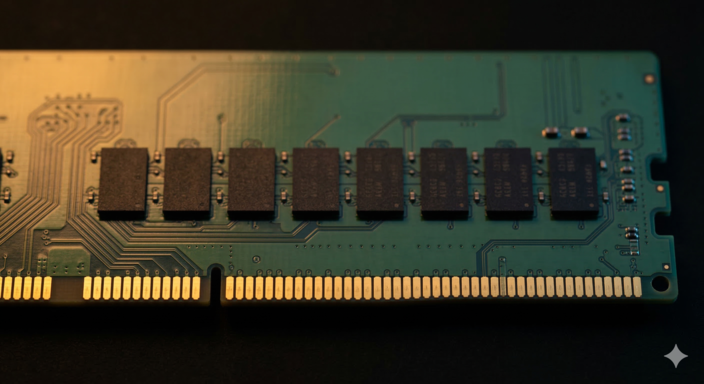
RAMageddon: The Shocking Truth About Skyrocketing Laptop Prices

If you’ve been shopping for a laptop recently and noticed prices creeping up — or if you’ve seen the word RAMageddon floating around tech forums and wondered what on earth it means — this is the article for you.
The short version: the global memory market is in crisis, laptop prices are already rising, and things are going to get worse before they get better. But there’s a right and a wrong way to respond to that as a buyer, and the answer isn’t simply “panic buy the first laptop you see.”
Here’s what’s actually going on, in plain English.
What Is RAMageddon?
“RAMageddon” is the nickname that’s stuck to the current global memory shortage — specifically the dramatic rise in the cost of DRAM (the type of memory used in laptops, phones, and computers) and NAND flash storage (the stuff inside SSDs).
The term sounds dramatic, but the numbers back it up. Samsung DDR5 contract prices have more than doubled since the end of 2025 — from around $7 per unit to $19.50. That’s not a small fluctuation. That’s the kind of price movement that ripples through every laptop on every shelf in every Currys, John Lewis, and Amazon UK listing. And here’s the thing that makes this particularly uncomfortable: it’s not going away any time soon.
Why Is This Happening?
The root cause is AI — specifically, the extraordinary demand for high-bandwidth memory (HBM) chips that power AI data centres.
Samsung, SK Hynix, and Micron between them control roughly 93% of the world’s DRAM production. All three have made the same calculation: HBM chips for AI infrastructure are far more profitable than the standard DDR5 memory that goes into your laptop. So they’ve been quietly redirecting production capacity away from consumer memory toward AI chips.
The result is a supply squeeze on the memory that ends up in everyday laptops and PCs — at exactly the moment when demand from consumers, students, and businesses remains steady. It’s not a conspiracy. It’s just where the money is. AI data centres will pay a premium that individual laptop buyers cannot compete with, and the big three memory manufacturers know it.
How Bad Is It Going to Get?
Quite bad, if the analysts are right. IDC and Gartner are both forecasting that combined DRAM and SSD costs could surge by around 130% by the end of 2026. That translates to laptop prices rising by roughly 17% on average — though budget machines at the sub-£500 end of the market are expected to feel the squeeze hardest. Intel’s own CEO has said there will be no meaningful relief until 2028. That’s not a typo. Two years of elevated memory prices, passed on to consumers in the form of higher laptop prices.
The most alarming prediction is what this means for entry-level machines. Some analysts believe that truly affordable sub-£400 laptops — the kind that students, families on tighter budgets, and casual home users have relied on — could effectively disappear from shelves by 2027 or 2028. Not because the technology doesn’t exist to make them, but because the components to build them will no longer be cheap enough to make the price point viable.
What Does This Mean for UK Laptop Prices Right Now?
Right now, in March 2026, you’re at the early stages of the price rise. Prices have already moved — if you were shopping six months ago, you’ll notice the difference — but the steeper increases are still ahead.
The UK market has a few specific dynamics worth knowing:
The Spring Sale window is closing. Amazon’s Spring Deal Days ran 10–16 March 2026, and Currys ran a simultaneous 15% off promotion. These sales were largely clearing out first-generation Snapdragon X machines before the new Snapdragon X2 models arrive — meaning you could get a 2025-spec laptop at a temporarily reduced price. By the time you read this, those deals may have passed, but the pattern tends to repeat around Amazon Prime Day in July.
Budget Windows laptops are squeezed hardest. The £300–£500 tier is where RAMageddon bites first. Manufacturers in this segment operate on thinner margins and have less ability to absorb component cost increases — so price rises here are faster and steeper than in the mid-range and premium tiers.
The MacBook Neo has changed the calculation. Apple’s shock £599 MacBook Neo — the cheapest Mac laptop ever — arrived in March 2026 at almost exactly the moment Windows OEMs started feeling the full force of the memory price spike. Apple had locked in component prices before the worst of RAMageddon hit, giving them a temporary structural cost advantage. For buyers who were already considering a Mac, the timing has never been better. For buyers committed to Windows, the calculus is more complicated.
Looking for a laptop right now? Our Best Budget Laptops UK guide covers the best options currently available at prices that still make sense — updated regularly as the market shifts.
Should You Buy a Laptop Now or Wait?
This is the question everyone is asking, and the honest answer is: it depends on your situation.
Buy now if:
You need a laptop within the next few months and your budget is under £600. This is the tier where prices are rising fastest and the current market still has good options at prices that won’t last. Waiting six months to a year in this price bracket is likely to mean getting meaningfully less for your money — either a slower processor, less RAM, or a smaller SSD for the same price you’d pay today.
You’re a student heading to university in September. By the time back-to-school season arrives, the full force of the memory price rises will be more visible. Buy before the summer if you can.
You’re replacing a broken or failing laptop. Don’t wait. A laptop you need now is worth more than a slightly better deal that might materialise in two years.
Wait if:
Your current laptop is working fine and you’re shopping out of curiosity or vague upgrade intent rather than genuine need. There’s no urgency in that situation, and forcing a purchase ahead of actual need rarely ends well.
You have a budget of £800 or more and are interested in 2026-generation chips. Intel Panther Lake, Snapdragon X2, and AMD’s latest are all landing in new machines throughout 2026. If you’re spending serious money, it’s worth seeing what those chips deliver before committing.
You’re specifically interested in a Snapdragon X laptop and need it to work with your printer, your university VPN, or specialist software. Compatibility issues with Windows on ARM are still unresolved for a meaningful chunk of software. Wait for either the software to catch up or the compatibility to be confirmed for your specific use case before buying.
The Refurbished Option Nobody Is Talking About
Here’s something that’s being consistently underreported in all the RAMageddon coverage: the used and refurbished laptop market hasn’t spiked in the same way.
Refurbished ThinkPads, Dell Latitudes, and HP EliteBooks — business-grade machines that have come off corporate leases — are still available at prices that haven’t moved significantly with the memory market. A three-year-old ThinkPad T14 with a solid Core i5, 16GB RAM, and a 512GB SSD from a reputable refurbisher like Back Market or Tier1 Online might set you back £250–£350. That same specification in a new machine is already heading toward £500 and rising.
For students, home users, and anyone who doesn’t need the latest chip generation, the refurbished market is worth a serious look right now — particularly while new prices are climbing and refurb prices haven’t followed.
UK consumer rights apply to refurbished goods purchased from businesses, which means you’re still covered by the Consumer Rights Act 2015. A 30-day right to a full refund, and up to six months where the seller has to prove the fault wasn’t there at purchase. It’s not quite the same as buying new, but it’s far from unprotected.
What Specs Should You Prioritise Given Rising Prices?
If you’re buying now and you want to get the most out of your money before prices climb further, here’s where to focus:
RAM first. The memory price rises make RAM the most directly affected spec. A machine with 16GB today may cost meaningfully more in six months. If you’re choosing between 8GB and 16GB at a price difference that feels manageable now, go for 16GB — you’ll be glad you did, and it’s the spec least likely to feel adequate over a five-year ownership period.
SSD size second. NAND flash storage is part of the same squeeze. A 512GB SSD is a comfortable minimum for most users. 256GB is workable but tight if you accumulate files, photos, or install multiple large applications.
Don’t overpay for the processor. Processor prices haven’t moved in the same way memory prices have. A mid-range chip from the last two generations — Core i5-1335U, Ryzen 5 7530U, and similar — gives you plenty of everyday performance at prices that remain reasonable. You don’t need the latest generation silicon to get a good laptop right now.
Avoid 4GB RAM machines entirely. They were already borderline in 2024. In 2026 with Windows 11 and modern browsers, 4GB is genuinely inadequate for comfortable everyday use. Any deal that looks attractive on price but ships with 4GB RAM is not a deal — it’s a frustration waiting to happen.
The Bottom Line
RAMageddon is real, it’s already affecting prices, and it’s going to get worse before it gets better. Intel’s own timeline points to no relief until 2028, which means UK laptop buyers are navigating a sustained period of rising costs — not a temporary blip.
That doesn’t mean you should panic. It means you should be strategic. If you need a laptop and your budget is under £600, the time to buy is now rather than later. If you’re in no rush, the refurbished market offers a genuine alternative to new machines at prices that haven’t felt the full force of the memory squeeze yet.
Whatever you decide, go in with eyes open. The £399 budget machine that seemed a safe choice a year ago is becoming rarer by the month — and that trend is only going one way.